Can you introduce yourself and share your background in nursing?
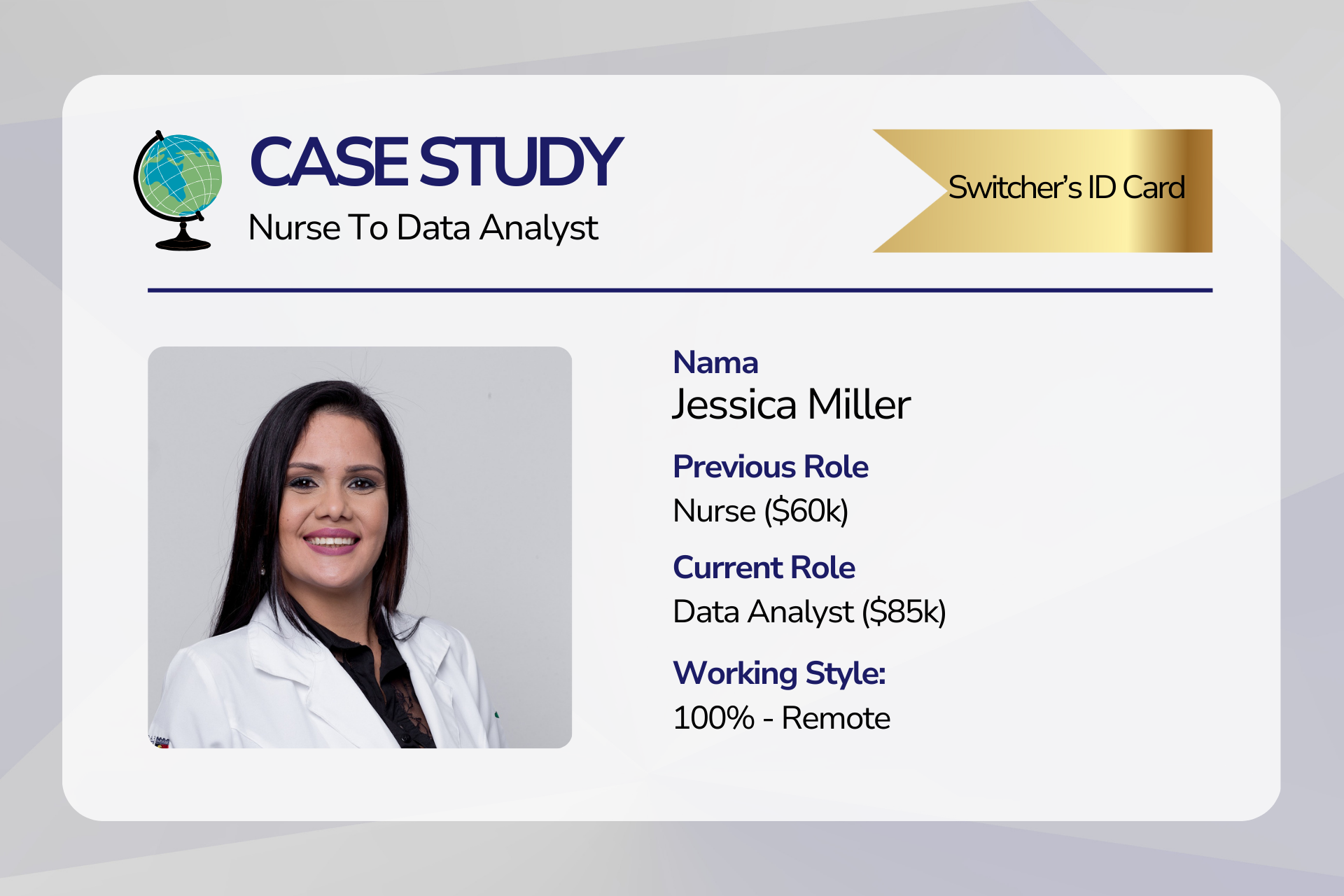
Hi, I am Jessica , and I worked as a registered nurse in Texas for nearly eight years. My days were filled with long shifts, patient care, and critical decisions. Nursing gave me empathy, precision, and the ability to stay calm under pressure. I loved helping people, but over time, I realized I wanted a career where I could still contribute to healthcare but in a way that offered more stability, flexibility, and growth. That’s when the idea of becoming a data analyst came into focus.
What inspired you to move from nursing into data analytics?
During the pandemic, I saw how hospitals relied heavily on data — patient statistics, staffing numbers, infection rates, and treatment outcomes. Data shaped every major decision. I realized that the analytical side of healthcare was just as powerful as the hands-on care I was providing. The thought of becoming a nurse to data analyst felt like a natural step, because I could leverage my healthcare background and pair it with technical skills.
How did you make the transition?
At first, I was overwhelmed. I didn’t have a tech degree, and I wasn’t sure if I could handle coding or statistics. But I started small: free online courses in Excel and SQL. From there, I enrolled in a healthcare-focused data analytics bootcamp that lasted six months. I learned SQL, Python, Tableau, and data visualization. I also worked on projects analyzing patient data sets, which made my portfolio relevant to the healthcare field.
I funded part of this journey with savings and also received partial tuition reimbursement through a workforce program in Texas designed to help career changers. Networking played a big role too. I connected with other professionals on LinkedIn who had gone from nurse to data analyst, and their stories motivated me.
What challenges did you face along the way?
One of the biggest challenges was imposter syndrome. As a nurse, I was confident. But in the tech space, surrounded by people with computer science backgrounds, I often questioned if I belonged. I had to remind myself that my domain knowledge in healthcare was a huge advantage.
Another challenge was balancing my job and studies. I worked night shifts while studying during the day, which was exhausting. But I stayed consistent and treated the coursework like part of my shift routine.
Where are you now in your career?
Today, I work as a healthcare data analyst for a hospital system in Dallas, Texas. I analyze patient readmission rates, staffing efficiency, and treatment outcomes to improve hospital performance. The problem-solving mindset I used in nursing — prioritizing patients, managing emergencies — now helps me prioritize data issues and translate them into actionable solutions.
I earn more than I did as a nurse, and my schedule is far more predictable. Plus, I still feel like I’m making a difference in healthcare, just from a different angle.
What advice would you give to other nurses considering a career in data analytics?
Don’t underestimate the skills you already have. Nurses are detail-oriented, resilient, and excellent at handling complex information — all qualities of a great data analyst. Start with small steps: take a course in Excel or data visualization, join online communities, and build a simple portfolio. And don’t be afraid to lean into your healthcare experience — employers value that combination of domain expertise and analytical skill.
Any final thoughts on your nurse to data analyst journey?
This transition has shown me that careers don’t have to be linear. Skills you’ve gained in one profession can fuel success in another. For me, moving from nurse to data analyst has been about blending compassion with technology, and I couldn’t be happier with the decision.
My Commentry on this case study
The nurse to data analyst career transition in the US is more than just a job change — it’s a pathway to a sustainable, impactful, and financially rewarding career. Nurses already possess many of the soft skills required in data analytics, and with additional training in technical tools, they can thrive in this field.
For US-based nurses considering a career switch, data analytics represents a unique chance to combine medical expertise with one of the fastest-growing industries in the world. With the right preparation, this transition can unlock exciting opportunities to influence healthcare outcomes and shape the future of patient care.