Q: What was your life like in the Marines?
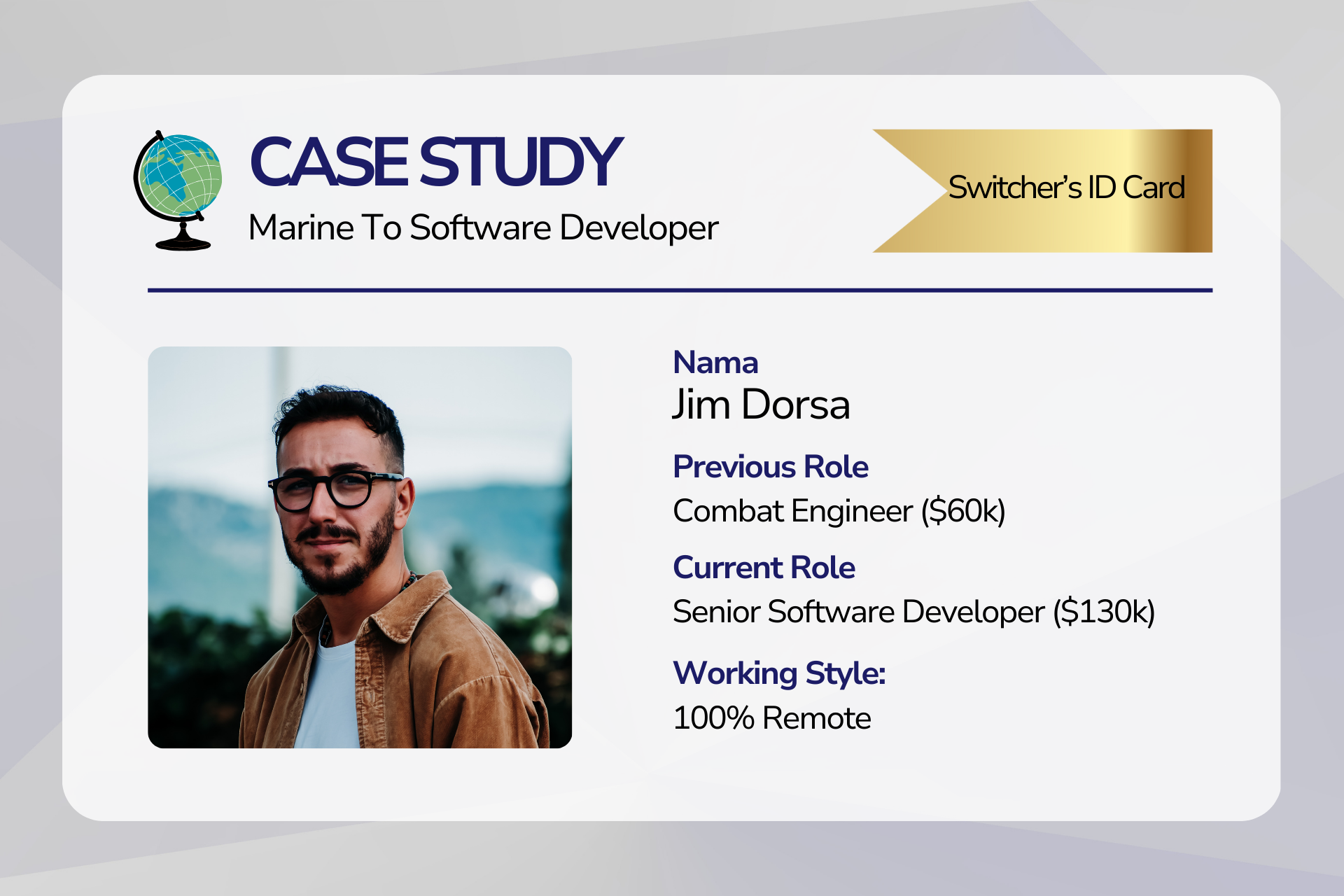
A: My time in the Marines shaped nearly every part of who I am today. I served as a Combat Engineer, which meant no two days were the same. Sometimes I was overseeing construction projects or ensuring that power supplies were running in difficult environments.
At other times, the work carried high risks, such as identifying and neutralizing explosive devices. These experiences demanded precision, a clear head under pressure, and the ability to collaborate closely with my team. The Marines drilled discipline into me, taught me how to stay calm in chaos, and made problem-solving second nature. Those lessons stayed with me long after I took off the uniform.
Q: Why did you decide to enter tech?
A: When I left the military, I had to ask myself, “What’s next?” I knew I wanted a career that would challenge me and allow me to continue growing. I had no interest in doing something routine or stagnant. What fascinated me about technology was that it’s always moving forward.
New tools, new languages, and new solutions are constantly being created. I realized the same mindset that helped me adapt in the Marines — being ready for change, solving problems quickly, and working as part of a team — would fit perfectly in the tech world. I also wanted a career where I could build things, not just with my hands but with ideas and code.
Q: How did you make the switch?
A: At first, the idea of moving into tech felt overwhelming. I didn’t have a background in computer science, and the military doesn’t exactly prepare you for writing code. But I decided to take it one step at a time.
Using the GI Bill, I enrolled in college and majored in Computer Science. The first time I sat down to write code, I felt a spark — it was the same rush I used to get when solving complex problems in the field.
I started with the basics: small projects, learning how to make simple programs run. As my confidence grew, I picked up programming languages like Java and Python. Outside of class, I challenged myself to build small applications and join coding communities online.
I also went to career fairs specifically for veterans, which helped me see that there were companies eager to hire people with my background — people who knew discipline, leadership, and teamwork. The transition didn’t happen overnight, but with each project and each interview, I got closer to my new career.
Q: What challenges did you face?
A: Honestly, one of the toughest challenges was learning how to translate my military experience into civilian terms. On paper, “Combat Engineer” doesn’t sound like it connects to coding or software.
I had to practice explaining my skills in a way that recruiters could understand — talking about problem-solving, adaptability, and leadership instead of military jargon.
There were financial challenges, too. Leaving the steady paycheck of the military was stressful. I had to plan ahead, save money, and make sacrifices while I was in school.
There were moments of doubt when I wondered if I had made the right choice. But just like in the Marines, I learned to keep pushing forward, even when things got difficult.
Q: Where are you now?
A: Today, I’m proud to say I’m a senior software developer specializing in cloud systems. I work with cutting-edge technologies and collaborate with a team that thrives on innovation.
The same discipline and resilience that helped me through tough days in the military now drive me to keep learning and improving as a developer.
I’ve come to see my journey as proof that no matter where you start, you can reinvent yourself. If a Marine who once disarmed explosives in the field can now write code that powers modern businesses, then anyone with determination can carve out a path in tech.
For me, this career isn’t just about writing lines of code — it’s about solving problems, building solutions, and knowing that I’ve successfully transitioned into a field that will continue to grow for decades to come.